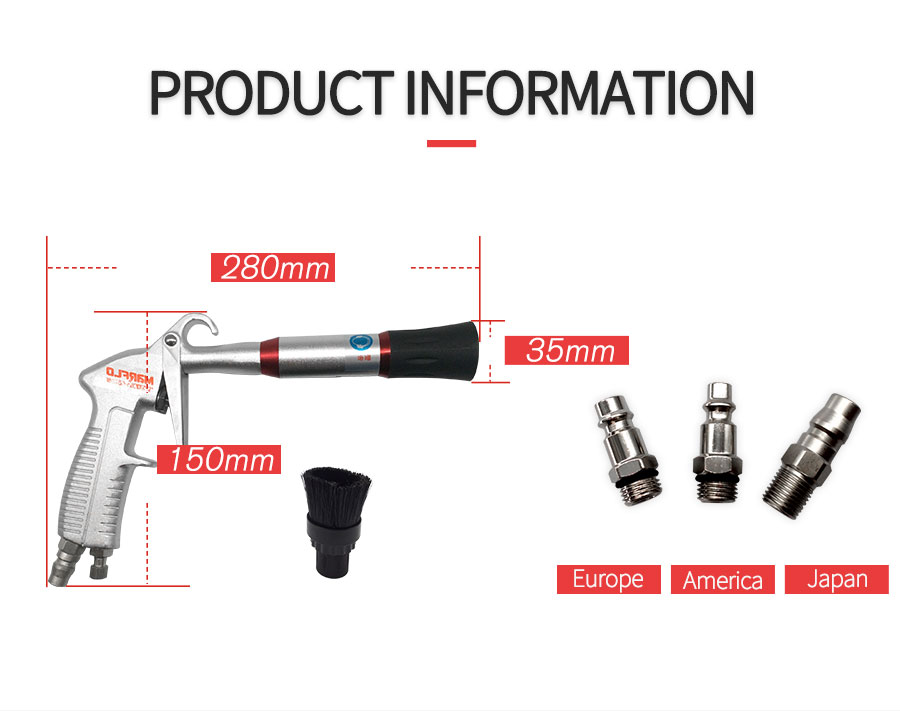
A Vortex Cleaning Gun is a specialized automotive detailing tool designed to provide deep cleaning for both interior and exterior surfaces of a vehicle, often used in professional detailing or by enthusiasts who want the most thorough cleaning possible. It uses compressed air to agitate and loosen dirt, dust, and debris from hard-to-reach areas that traditional cleaning methods might miss.
Here’s how it works and its features:
1. Principle of Operation:
- The gun connects to an air compressor and uses high-pressure air to create a vortex-like motion.
- This vortex is powerful enough to dislodge dirt particles and debris from intricate surfaces such as vents, cracks, crevices, and upholstery.
- Often, it works in conjunction with a cleaning solution or water to enhance cleaning power, though some vortex guns are designed to dry surfaces as well.
2. Components:
- Nozzle/Head:The design of the nozzle creates the vortex of air. Some models may allow you to adjust the intensity or spread of the air depending on the surface being cleaned.
- Air Hose:The gun is connected to a compressed air source via a hose, typically requiring an air compressor with enough PSI (pounds per square inch) to operate.
- Solution Chamber:Some versions have a chamber where cleaning solution or water can be placed, which gets atomized and sprayed along with the air.
3. Benefits of a Vortex Cleaning Gun:
- Deep Cleaning:The swirling air can reach deep into hard-to-reach areas, agitating dirt from upholstery fibers, vents, dashboard crevices, carpets, and more.
- Drying Capabilities:It can be used to dry the car after washing, helping to speed up the drying process and reduce water spots.
- Efficiency:It reduces the need for multiple cleaning tools by combining the effects of air, agitation, and sometimes cleaning agents.
- Versatility:It can clean various surfaces, from the car’s interior to the exterior, such as wheels, fenders, and engine bays, making it a versatile tool for any detailer.
4. Common Uses:
- Interior Detailing:Removing dust, dirt, and debris from vents, seat seams, carpets, and upholstery.
- Exterior Detailing:Cleaning tight spaces like wheel wells, around badges, grilles, and between body panels.
- Engine Bay Cleaning:It can safely blow out dirt and grime from engine compartments without risking electrical components.
- Drying:Some vortex guns are used as drying tools to help eliminate water spots and leave a streak-free finish on your car.
5. Maintenance:
- Air Compressor:Ensure your air compressor provides sufficient PSI for effective operation—typically, 90-120 PSI is ideal.
- Cleaning Solution:If your vortex gun has a solution chamber, ensure the cleaning agents used are suitable for the materials you're cleaning (e.g., safe for upholstery, delicate surfaces).
- Nozzle Care:The nozzles can get clogged, so periodic cleaning or changing of the nozzle may be necessary to maintain optimum performance.
6. Popular Brands:
- MetroVac:Known for the MetroBlaster, which is a powerful air tool often used with vortex cleaning technology.
- Adam’s Polishes:Offers tools that integrate vortex-like air agitation for cleaning and drying.
- Brilliatech:Known for their high-quality air guns and clay bars, especially in the detailing industry.
7. Limitations:
- Compressed Air Requirement:These tools require a continuous source of compressed air, which means they may not be portable unless you have a large enough air tank.
- Noise Level:The high pressure of the air can make the tool quite loud, especially when used in confined spaces.
- Not Suitable for All Surfaces:While they are very effective at agitating and loosening dirt, they may not be as effective at removing heavy stains or greasy buildup without the addition of a cleaning agent.
In short, a vortex cleaning gun is an excellent tool for professionals looking for efficient, thorough cleaning power with minimal physical effort. It excels at agitating dirt and drying surfaces, especially when you have multiple hard-to-reach or intricate areas in need of attention.


