Clay bar products are designed to remove bonded contaminants that washing and chemical cleaners cannot eliminate, but they must be used correctly to avoid paint damage. Beginners should only use clay bar products after a proper wash, with sufficient lubrication, light pressure, and controlled movements. Clay bars are not meant to be forced across the surface or used on dry paint.
You need clay bar products when a vehicle’s surface still feels rough after washing and chemical cleaning, especially before polishing, waxing, coating, or PPF installation. You do not need to clay every vehicle or repeatedly once the surface is smooth. The safest clay bar process focuses on order, lubrication, frequent inspection of the clay surface, and knowing when to stop. Most clay bar damage comes from rushing, not from the clay bar itself.
Clay bar products are often described as “safe” tools.
This is true—when they are used correctly.
However, many beginners experience:
light scratches
haze
unexpected marring
not because clay bars are aggressive, but because the process is misunderstood.
From the Brillialtd perspective, clay bar use is not about strength or speed.
It is about order, awareness, and restraint.
Clay bar products are safe tools — but only when the process is respected.
This guide walks beginners through a basic SOP designed to reduce risk and build confidence.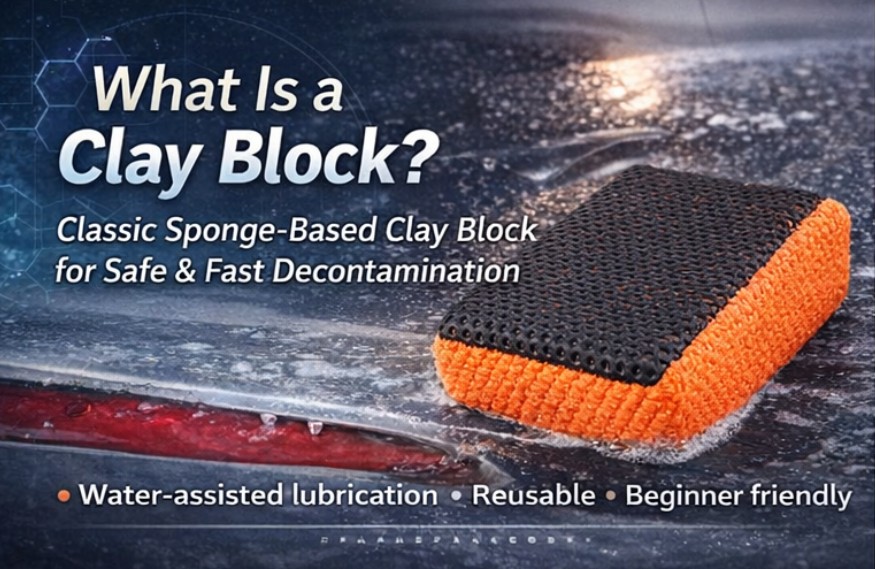
Clay bar products should never be used on an unwashed surface.
Before claying, the paint must be free from:
loose dirt
sand
dust
road grit
Clay bars remove bonded contamination, not loose debris.
If loose particles remain on the surface, the clay bar will drag them across the paint.
This sort of contamination is the most common cause of beginner paint damage.
Rule #1:
If the surface isn’t clean enough to touch safely, it’s not ready for a clay bar.
Not all clay bar products are suitable for first-time users.
Beginners should start with:
fine-grade or mild clay bars
softer, more forgiving formulations
Avoid:
aggressive clay bars
“heavy cut” clay
products designed for industrial decontamination
A stronger clay bar does not make the process easier.
It only increases risk.
Beginners don’t need stronger clay bars — they need safer ones.
Lubrication is not optional when using clay bar products.
It is the safety layer between the clay and the paint.
Proper lubrication:
reduces friction
allows the clay to glide
prevents sticking and grabbing
For beginners:
more lubrication is always safer than less
a visibly wet surface is required
Do not apply clay to a dry or "almost dry" surface.
If it looks dry, stop. Reapply lubrication.
Do not use the entire clay bar at once.
For beginners:
cut or break the clay bar into smaller pieces
use only what you can control comfortably
Why this matters:
smaller pieces are easier to handle
if dropped, less product is wasted
pressure is easier to manage
If a clay bar touches the ground, it must be discarded.
Clay bar products work through contact, not force.
Beginner rules:
use light pressure only
move the clay in straight lines
avoid circular or scrubbing motions
You should not hear loud friction noises.
You should not feel resistance once contamination is removed.
Clay bars glide when the surface is clean.
If they don’t, stop and reassess.
Clay bar products collect contamination as they work.
Beginners should:
inspect the clay bar every small section
fold and expose a clean surface often
Using a dirty clay bar is more dangerous than using no clay at all.
Dirty clay = trapped particles + direct paint contact
Beginners often try to clay:
entire panels at once
large areas without checking progress
This increases risk.
Instead:
work in small sections
check smoothness with your hand
stop once improvement is achieved
Clay bar use is not a race.
One of the most important beginner skills is knowing when to stop.
You should stop claying when:
the surface feels smooth
resistance disappears
no further improvement is felt
Clay bars are not polishing tools.
They do not improve gloss through continued use.
The goal of claying is improvement — not perfection.
Before finishing, review this checklist:
❌ Claying without washing first
❌ Using aggressive clay bars as a beginner
❌ Not using enough lubrication
❌ Applying pressure to “speed things up”
❌ Using circular or scrubbing motions
❌ Ignoring a dirty clay bar surface
❌ Claying the same area repeatedly without need
❌ Continuing after the surface is already smooth
Most clay bar damage comes from rushing, not from the product itself.
After claying:
rinse or wipe away residue
dry the surface carefully
Next steps may include:
waxing
sealing
polishing (if needed)
Claying prepares the surface—it does not finish it.
Clay bar products are one of the most effective surface preparation tools available.
They are also one of the most misunderstood.
For beginners, safety comes from:
correct order
sufficient lubrication
light pressure
frequent inspection
knowing when to stop
When used patiently and correctly, clay bar products are not risky tools.
They are precision tools that reward careful use.
Slow down, respect the process, and clay bars will work with you — not against you.


