
Content Menu
Clay Lubricant and Quick Detailer: Essential Products for Car Detailing
● Understanding Clay Lubricant
● How Does Clay Lubricant Work?
● The Role of Quick Detailer in Car Detailing
● How Does Quick Detailer Work?
● How to Use Clay Lubricant and Quick Detailer
● Key Differences Between Clay Lubricant and Quick Detailer
● Frequently Asked Questions (FAQs)
Car detailing is more than just a simple cleaning process; it’s about restoring the vehicle’s appearance to its optimal condition and protecting its surfaces from contaminants. Two essential products in this realm are Clay Lubricant and Quick Detailer. Both play significant roles in ensuring your car stays looking its best while enhancing the longevity of its finish. In this comprehensive guide, we will explore the importance of these products, their applications, and how they contribute to the overall detailing process.
Clay lubricants are an indispensable product in the detailing industry. They are specifically designed to facilitate the use of a clay bar on a vehicle’s paint surface. A clay bar, when used on a vehicle, helps remove contaminants that regular washing cannot. These contaminants include industrial fallout, tar, tree sap, bird droppings, and road salts. Without removing these impurities, your car’s paint can feel rough and may appear dull, even after a thorough wash.
A clay lubricant is a special solution that creates a slick layer on your vehicle’s paintwork, making it easier for the clay bar to glide over the surface. Without a lubricant, the clay bar would drag across the surface, potentially leaving behind scratches or marring the paint. The lubricant acts as a protective barrier that ensures smooth contact between the clay bar and the paint, providing a safer and more effective decontamination process.
When you apply the clay lubricant to a section of the vehicle’s paintwork, it wets the surface and helps lift any contaminants that may be embedded in the clear coat or on the paint surface. The clay bar, when used in conjunction with the lubricant, will trap these contaminants, leaving the surface smooth and clean. This process also prepares the surface for further detailing steps, such as polishing and waxing.
1.Improved Surface Smoothness: The primary benefit of using a clay lubricant is the smooth, glass-like finish it provides. After clay barring a vehicle with the proper lubricant, the surface feels silky smooth to the touch.
2.Enhanced Paint Protection: By removing harmful contaminants from the paint, you prevent them from affecting the longevity of the paintwork. Contaminants like industrial fallout and bird droppings can cause corrosion or permanent staining if left untreated.
3.Prepares the Surface for Further Detailing: A clean and smooth surface is crucial before applying any wax, sealant, or polish. Clay lubricant helps in achieving this ideal preparation.
4.Improved Appearance: By removing surface contaminants, clay lubricants restore the paint’s shine, bringing out the car’s true color and depth. This is especially beneficial for older vehicles or cars with heavily contaminated surfaces.
Quick Detailers, like clay lubricants, are crucial products in the world of car care. While they may not be as essential for deep decontamination as a clay lubricant, quick detailers provide numerous benefits that make them popular among detailing enthusiasts and professionals alike.
A quick detailer is a versatile product designed to clean, shine, and protect your vehicle’s paint in a short amount of time. It is typically used for light cleaning between regular washes, or to remove dust, fingerprints, or water spots that can accumulate on a car’s surface. Quick detailers are typically spray-on products that, when wiped off, leave a glossy finish behind.
Quick detailers are usually sprayable products that are applied directly to a vehicle’s surface. They contain lubricating agents and cleaning components that help lift light dirt and grime from the surface. In addition to cleaning, they often contain oils or silicones that leave a layer of protection on the paint. This layer can add a quick shine, protect against UV rays, and even offer water-repelling properties.
1.Convenience: Quick detailers are fast and easy to use. They are perfect for cleaning up a vehicle between washes or for quickly touching up the paint after a road trip.
2.Enhanced Shine: Many quick detailers contain gloss-enhancing agents, which help boost the vehicle's shine without needing a full polishing session.
3.Protective Layer: Some quick detailers also contain protective ingredients that can act as a barrier against dirt, water spots, and other contaminants. This makes it easier to maintain a car’s clean look between more intensive cleaning sessions.
4.Versatility: While they are primarily used for exterior detailing, quick detailers can also be used on glass, trim, and wheels. They offer a great way to touch up all surfaces of the vehicle.
5.Water Spot Removal: Quick detailers are particularly effective at removing water spots caused by rain or car washes. This is a common problem in vehicles that are often parked outdoors or washed frequently.
1.Preparation: Start by washing your car thoroughly to remove any loose dirt and debris. This ensures that you’re not rubbing abrasive particles into the paint while using the clay bar.
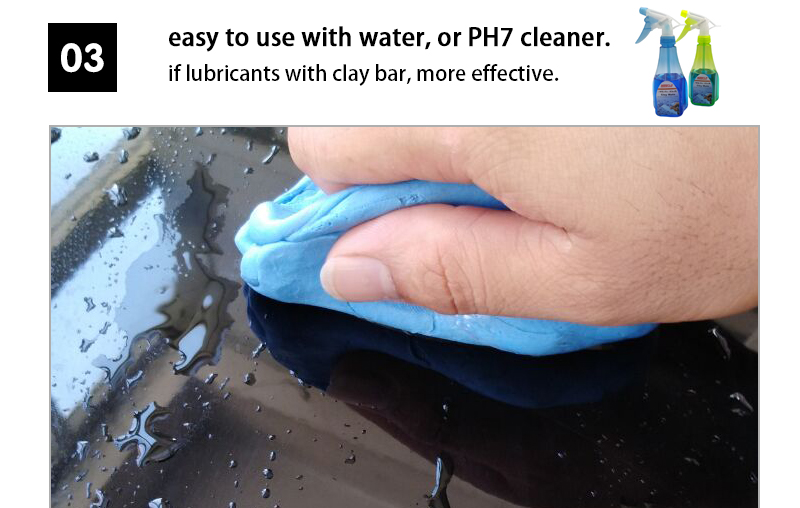
2.Application: Spray the clay lubricant generously onto a small section of the vehicle’s surface, making sure the area is wet enough to allow the clay bar to glide smoothly.
3.Clay Bar Process: Take a clean piece of clay bar and knead it until it is soft and pliable. Lightly press the clay bar onto the lubricated surface and move it in back-and-forth motions. You should feel the clay bar smoothly gliding without resistance. If you feel any roughness, it means the clay bar is removing contaminants from the paint.
4.Wipe and Inspect: After using the clay bar, wipe down the surface with a microfiber towel to remove any excess lubricant and contaminants. Inspect the surface for smoothness; if it’s not smooth enough, repeat the process.

1.Spray the Product: Apply the quick detailer directly onto the vehicle’s surface. It’s best to work in small sections, so the product doesn’t dry before you have a chance to wipe it off.
2.Wipe with a Microfiber Towel: Use a clean microfiber towel to gently wipe the product off the surface. Buff the area until you achieve a glossy finish.
3.Repeat as Needed: For larger areas or surfaces with stubborn marks, you may need to repeat the process. Quick detailers are easy to apply and safe to use frequently.
While both products are used to improve the appearance of your car, they serve distinct purposes:
Clay Lubricant is used during the clay bar process to remove deeply embedded contaminants that regular washing cannot eliminate. It is essential for decontaminating the vehicle’s surface before any waxing or polishing.
Quick Detailer is used for light cleaning and enhancing the shine of the paint between washes. It’s a product for quick touch-ups rather than deep cleaning.
Both clay lubricants and quick detailers are vital tools in the car detailing process. They help maintain the vehicle's appearance, protect its paint, and ensure that the car continues to shine like new. Understanding when and how to use these products will enhance your car care routine, whether you're a professional detailer or an enthusiastic car owner looking to keep your vehicle looking pristine.
1.Can I use clay lubricant without a clay bar? While clay lubricant is designed to be used with a clay bar, it can also be used on its own for light lubrication when buffing or polishing. However, for deep contamination removal, a clay bar is required.
2.How often should I use a clay bar on my car? Using a clay bar is typically recommended every 6-12 months, depending on how exposed your vehicle is to contaminants. If you notice roughness on the paint surface, it’s time to clay your car.
3.Is quick detailer safe for all surfaces? Quick detailers are generally safe for most surfaces, including paint, glass, chrome, and trim. However, always check the product label to ensure it is safe for use on your specific vehicle.
4.Can I apply a quick detailer on a wet car? Yes, you can use a quick detailer on a wet car. In fact, it’s often recommended to use it after washing to add an extra layer of shine and protection.
5.Do I need to remove wax or sealant before using a clay bar? No, you do not need to remove wax or sealant before claying your car. The clay bar will remove contaminants without stripping the wax or sealant, although it might leave the surface less slick.